Cheapest here3 hours
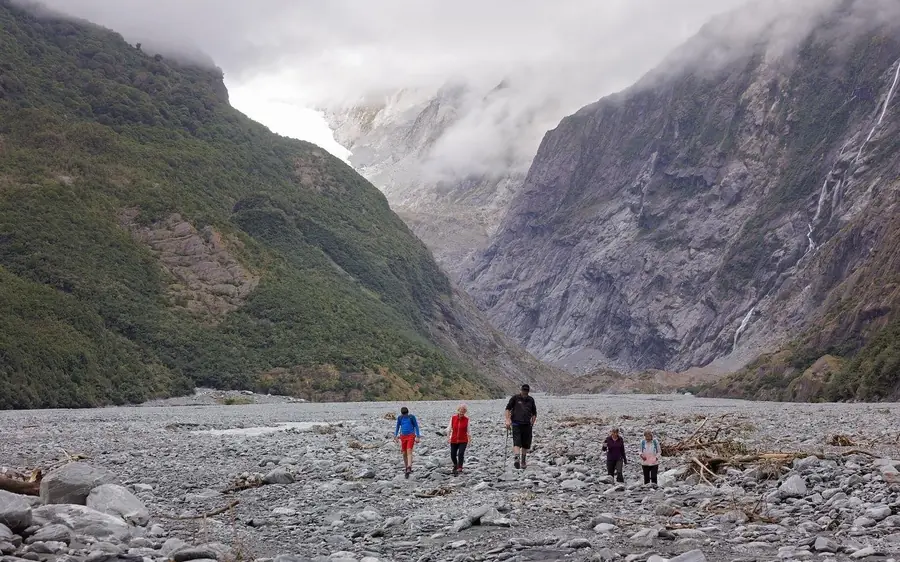
3 hGlacier Lookout Guided Walk
★ 4.8 · 169 reviews
- Three hours, on a guided walking tour
- Rainforest and Franz Josef Glacier Valley
- Personalized tour of the glacier valley
- Free cancellation
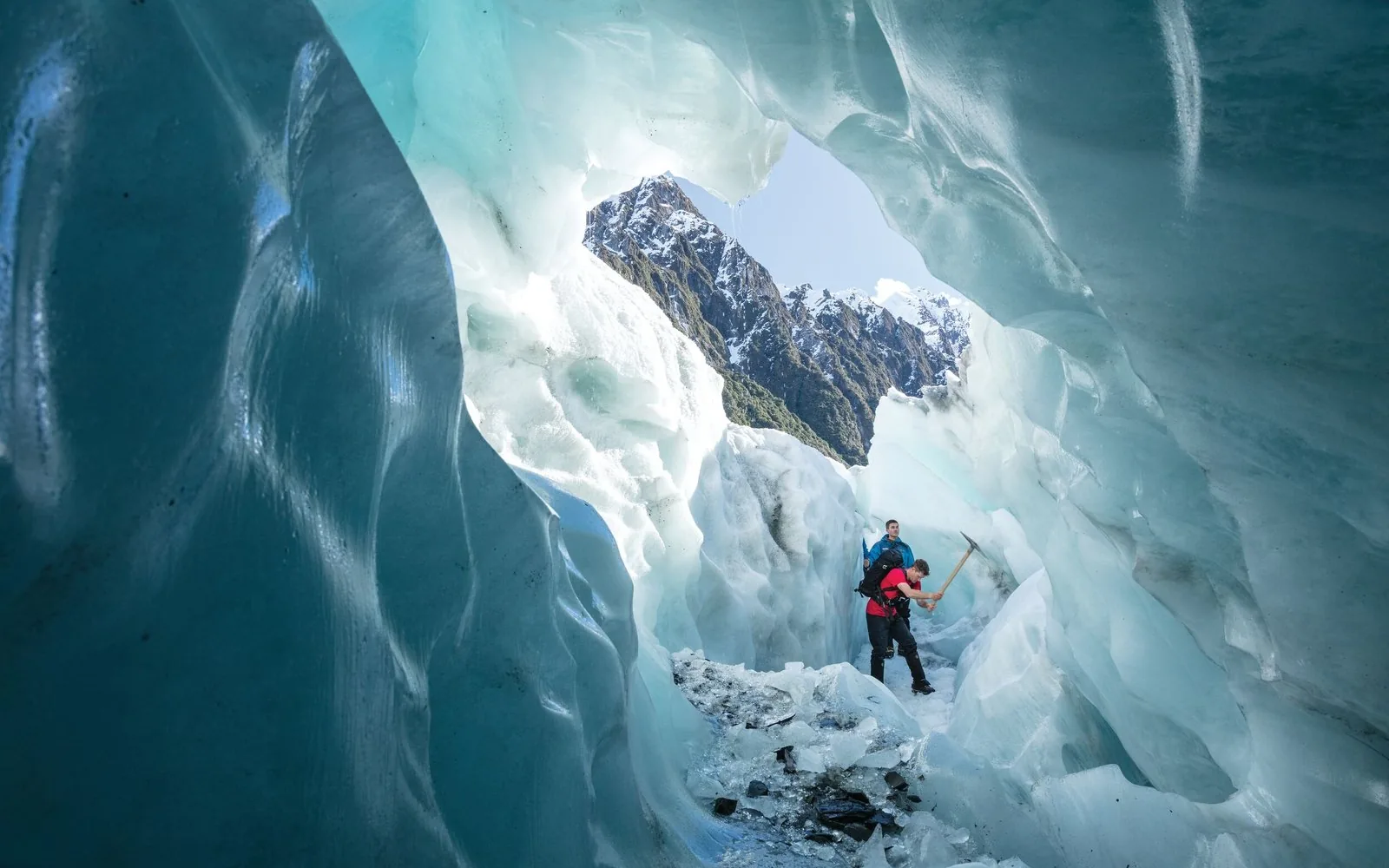
Book a Franz Josef heli hike and reach glacier ice with a guide. We compared 12 tours from $61, all with free cancellation; the top 2.5-Hour Heli-Hike scores 4.8 from 398 reviews. A helicopter drop leads to blue tunnels and fresh crevasses.
Heli hike, per person
3 heli hikes$497
Today's lowest price across all 12 tours
Average rating
All 12 tours48
1,759 verified reviews across 12 tours
Your day
Shortest to longest20min–8h
Shortest: Snow Landing
Longest: Extended Heli-Hike & Lunch
Everything you can book here
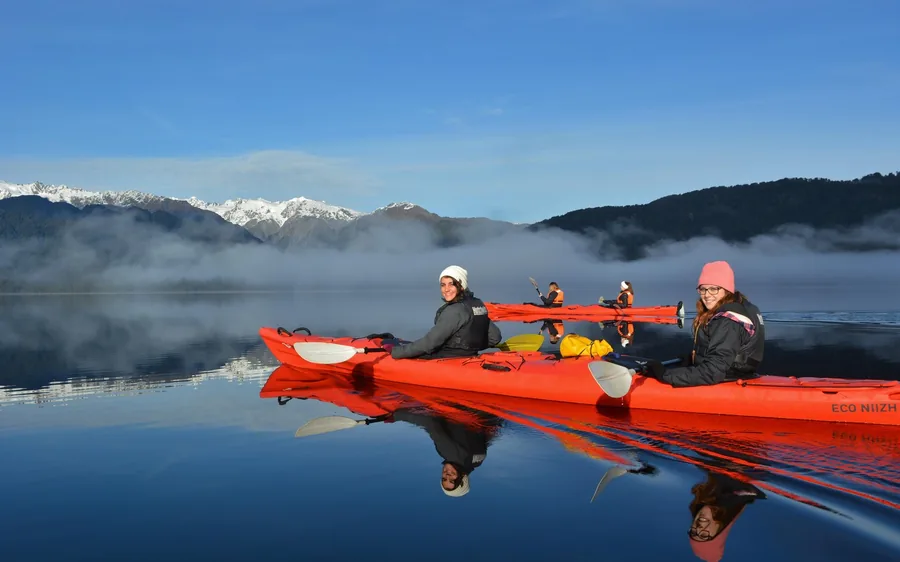
Three guided heli hikes onto the ice, two scenic flights over it, and seven things to do with the days the weather takes away — from a $61 valley walk to a kayak on a lake that reflects the whole Southern Alps. Sorted by price, cheapest first.
★ 4.8 · 169 reviews
★ 4.7 · 188 reviews
★ 4.9 · 137 reviews
★ 4.8 · 77 reviews
★ 4.9 · 72 reviews
★ 4.9 · 326 reviews
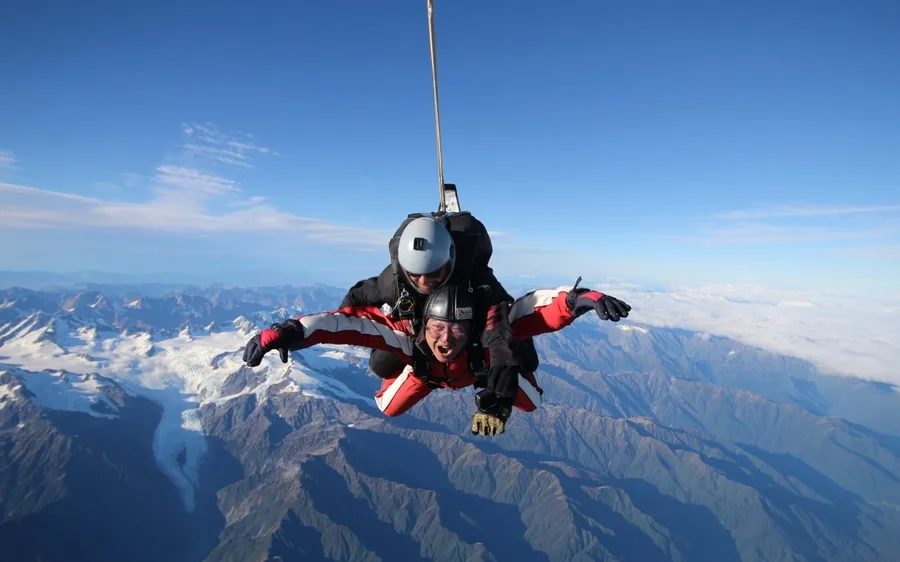
★ 4.9 · 129 reviews
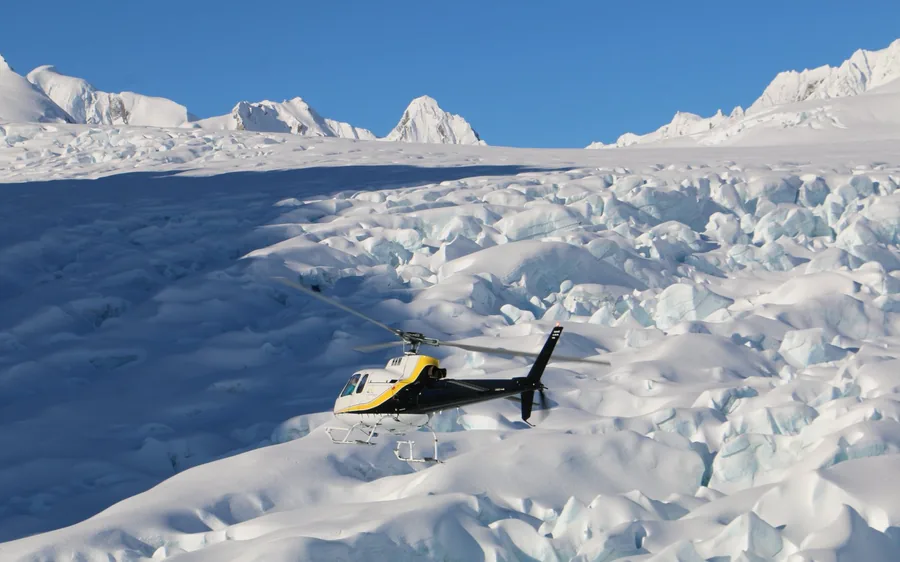
★ 4.9 · 190 reviews
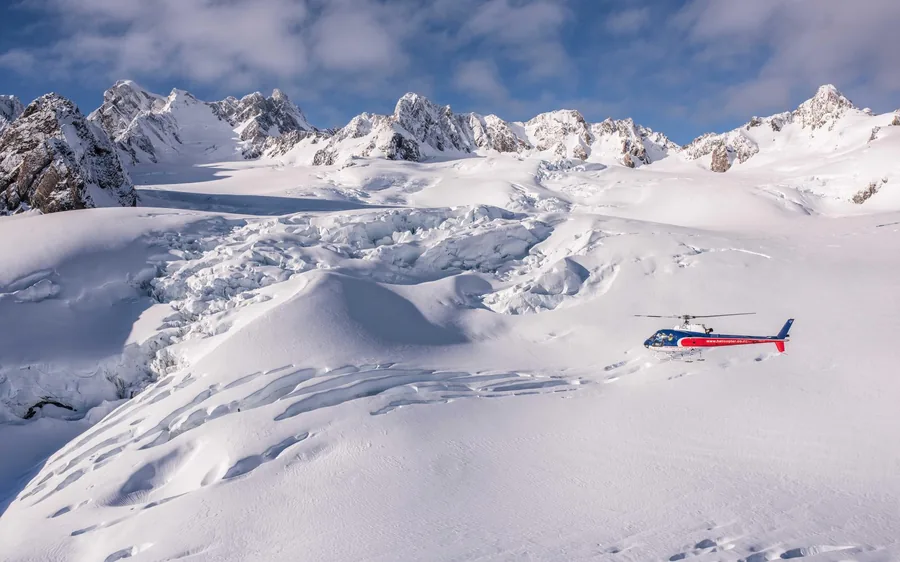
★ 4.5 · 44 reviews
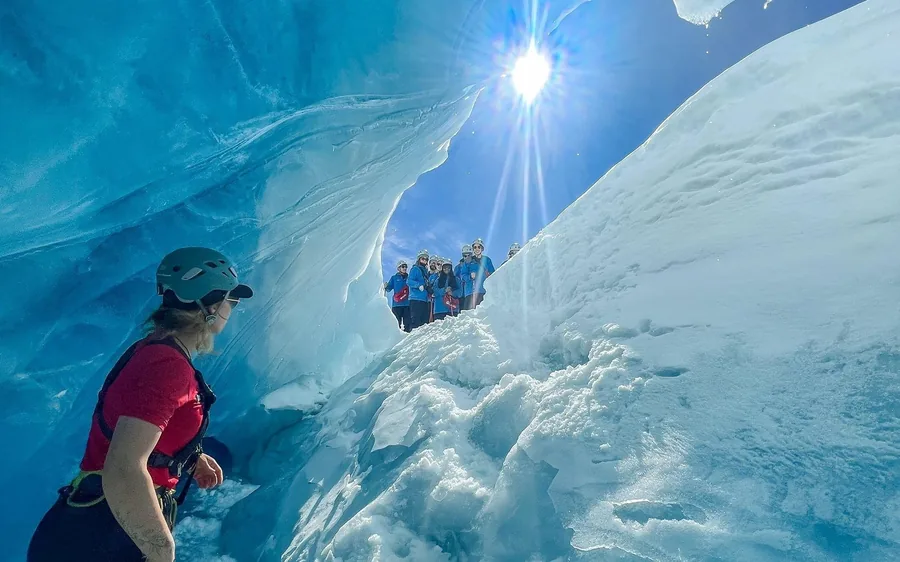
★ 4.8 · 398 reviews
★ 5.0 · 1 reviews
★ 4.8 · 28 reviews
Two questions
Seen the twelve above and still torn? There are really only four answers here. Walk on the ice for two and a half hours. Look at it from the air for twenty minutes. Spend a whole day up there with lunch. Or spend nothing much and walk the valley. Pick what matters and we will point at one.
See it before you pay for it
The clips below are the hike, not a promo reel. The machine puts you down on the névé, lifts off, and the noise goes with it. Then you follow a guide with an ice axe through a landscape that is being rebuilt every day — pressure ridges, moulins, tunnels with light coming through two metres of blue ice. Nothing you walk on today was in the same place last month.
Side by side
Three completely different days, and most people book the wrong one. The heli hike puts you on the ice for two and a half hours. The scenic flight shows you the whole glacier in twenty minutes and lands on snow beside it. The valley walk is free and stops at a rope a kilometre short of the terminal face. They are not cheaper and dearer versions of one thing.
Swipe the table sideways →
| 20-Minute Snow Landing Flight | TOP PICK2.5-Hour Heli-Hike | Extended Heli-Hike with Lunch | |
|---|---|---|---|
| Price per person | $199 | $497 | $857 |
| Time on the ice | 10 minutes on snow | 2.5 hours walking | About 4 hours |
| Cost per hour on the ice | $603.03 | $198.80 | $214.25 |
| You are | In the machine | In crampons | In crampons, all day |
| Gear supplied | None needed | Boots, crampons, jacket | Boots, crampons, jacket |
| Group size | 5 – 6 in the machine | Up to 11 per guide | Small group |
| Lunch | No | No | Yes, on the glacier |
| Rating | 4.9 · 190 | 4.8 · 398 | 5.0 · 1 |
| Best for | Seeing the whole glacier | Walking on it | Having it to yourself |
| Check dates | Book this one→ | Check dates |
Free cancellation up to 24 h · Reserve now, pay later
Verdict
It is the only trip here that puts you on the glacier for longer than a photograph, and that is the whole decision. The scenic flight at $199 shows you the same ice from four hundred feet and gives you ten minutes standing beside the machine. The heli hike gives you two and a half hours inside it — the tunnels, the moulins and the pressure ridges that simply are not visible from the air.
Check dates and availability→Before you book
Every photograph of a guided party in the ice of Franz Josef that you have seen since 2012 was taken by somebody who flew there. The terminal face collapsed that year, the walking route went with it, and the glacier has retreated further since. The valley track now ends at a roped viewpoint about a kilometre short of the face. There is no cheaper way onto the ice and no harder way either — there is simply no way that does not start with a helicopter.
Two-minute check
More heli hikes here are lost to weather than to anything else, and the number of nights you have in the village decides your odds more than the operator you pick. Answer three questions and find out now instead of at the base.
How many nights are you in Franz Josef?This decides your odds more than anything else
How is your fitness?You will walk on uneven ice for two to three hours
How long do you want on the ice?This is the only real variable
You’ll get the one that fits your answers, and the thing about it that catches people out.
Six ways onto the ice
Ratings are the operators’ own numbers on GetYourGuide, shown as published. We do not write reviews and we do not average other people’s into a score of our own.
★★★★★
Based on 1,759
verified reviews
All twelve Franz Josef flights on this page, rated on GetYourGuide.
Read all 1,759→2.5-Hour Heli-Hike
From $497 · 398 reviews
★★★★★
A helicopter puts you high on the ice and leaves. Two and a half hours in crampons behind a guide who cuts the steps, through blue tunnels and past crevasses. Rated 4.8 across 398 reviews — more than every other heli hike here combined.
Extended Heli-Hike with Lunch
From $857 · small group
★★★★★
A full day up there with lunch on the glacier and a small group, going further into the blue features than the standard hike reaches. Twice the money and roughly twice the time on the ice.
20-Minute Snow Landing Flight
From $199 · 190 reviews
★★★★☆
Twenty minutes over the icefall with a snow landing and ten minutes out of the machine. Less than half the price of the hike, and a completely different day: you photograph the glacier rather than walk on it.
Glacier Lookout Guided Walk
From $61 · about 3 hours
★★★☆☆
A guided walk up the riverbed to the viewpoint with someone who can read the valley for you. It is worth doing and it has an honest limit: the barrier sits about a kilometre short of the terminal face.
Walking onto the glacier from the valley
No longer possible · since 2012
★☆☆☆☆
Guided walks used to start at the terminal face and climb onto the ice. After the face collapsed in 2012 and the glacier retreated, that route stopped existing. Anything describing a guided ice walk that starts from the car park is out of date.
Heli-Hike from Queenstown
From $995 · one day
★★★★☆
A scenic flight over the Main Divide, the heli hike on the ice, and back to Queenstown the same day. It removes eleven hours of driving, and it costs about twice what the hike costs on its own.
What it really costs
You are not buying a longer helicopter ride. You are buying two helicopter transfers, a guide for a small group, boots, crampons, jacket and overtrousers, and a route that someone cut into the ice that morning because yesterday’s route has moved.
Swipe sideways →
| What you buy | Price | What is included | Cancellation |
|---|---|---|---|
| Guided heli hike, 2.5 hours on the ice | $497 | Two flights, guide, crampons, boots, jacket | Free up to 24 hours |
| Scenic flight with a snow landing | $199 | One flight, ten minutes out of the machine, no gear | Free up to 24 hours |
| Glacier valley walk from the car park | Free | Nothing — and it stops a kilometre short of the ice | n/a |
The honest answer
Five hundred dollars is a lot of money for half a day and we are not going to pretend otherwise. What you are buying is the only way to walk on this glacier at all. The valley track stops at a rope, and it has done since 2012. Nobody comes back saying it was too expensive; plenty come back saying they wish they had allowed a second day for the weather.
The day, hour by hour
The base watches cloud base and wind on the névé, not rain in the village. A wet morning in town is often a workable morning up top, and a bright one can be grounded.
Boots, crampons, a jacket, overtrousers and a small pack, all supplied. Bring your own warm layer and a pair of thick socks. Allow the full hour; the fitting is not quick.
How to approach the machine, how to walk in crampons, and what to do if the weather turns while you are up there. Then the doors close.
Over the terminal face, over the grey rubble the glacier left behind, and up past the icefall. Short, loud and completely worth the ticket on its own.
It sets down on the névé, you get out, and it lifts off again. The noise goes with it and what is left is silence and a guide with an ice axe.
Crampons on, single file, following steps that were cut this morning. Blue tunnels, pressure ridges, moulins, and a route that will not exist next week.
The machine comes back to the same spot, or to another one if the ice has moved. Five minutes down, and you are peeling off crampons in the village by mid-afternoon.
Best time of day
A heli hike needs two clear windows, not one: the machine has to drop you and it has to come back. That is why the afternoon departures are stood down more often than the morning ones, and why an operator will happily fly a scenic flight in conditions that will not carry a hike. The first slot of the day flies in the stillest air, gets the low light in the tunnels, and leaves the rest of the day behind it if the weather closes in. Book it on the first full day of your stay, not the last.
On the ice
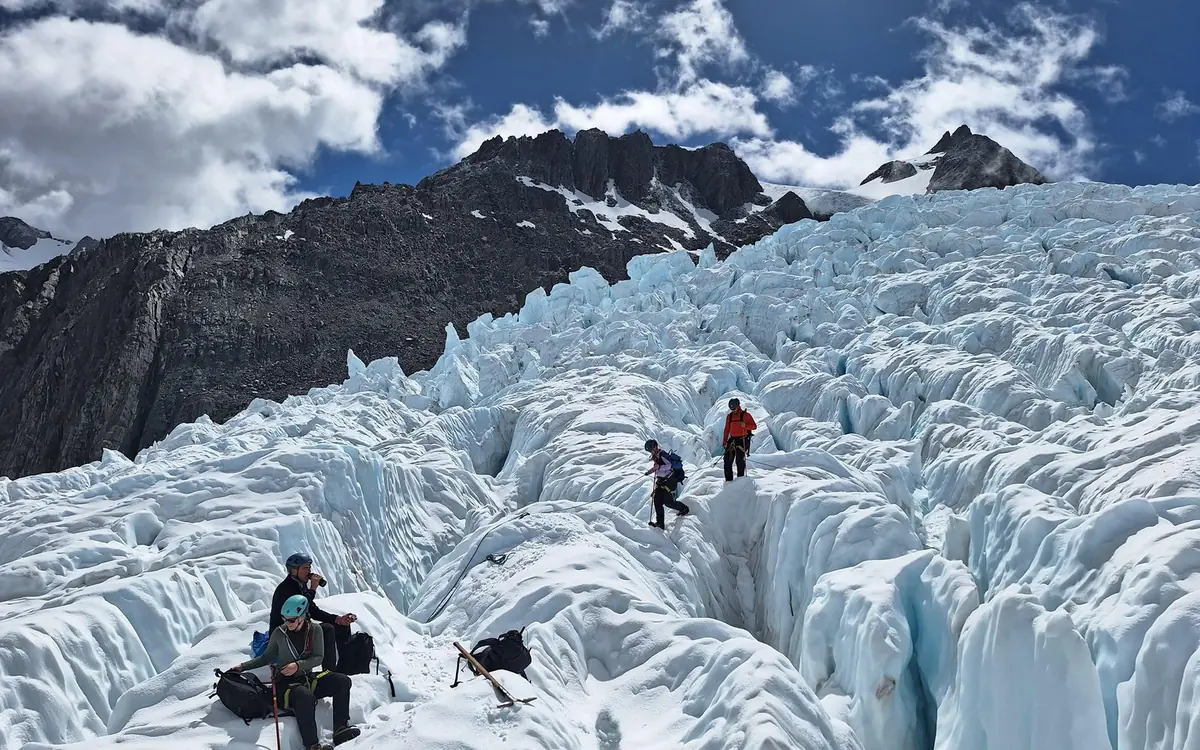
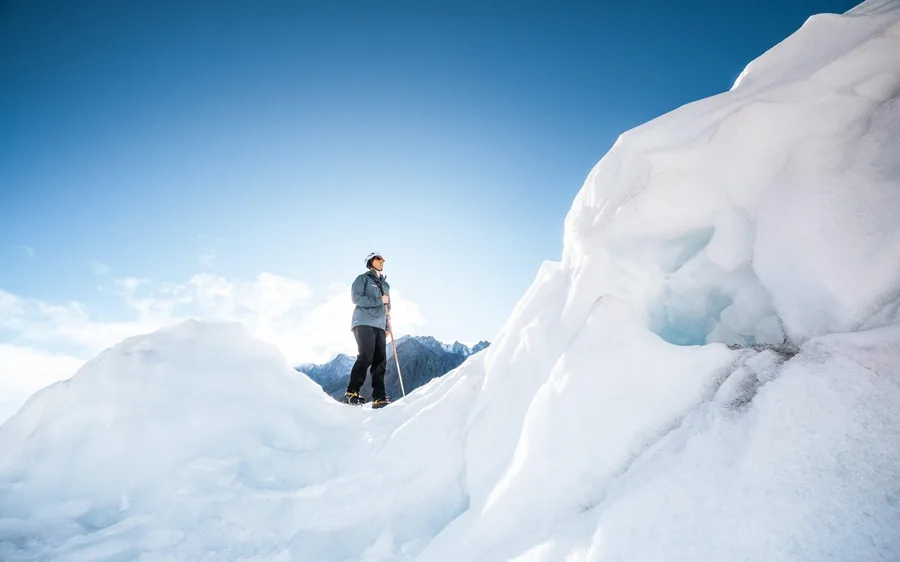
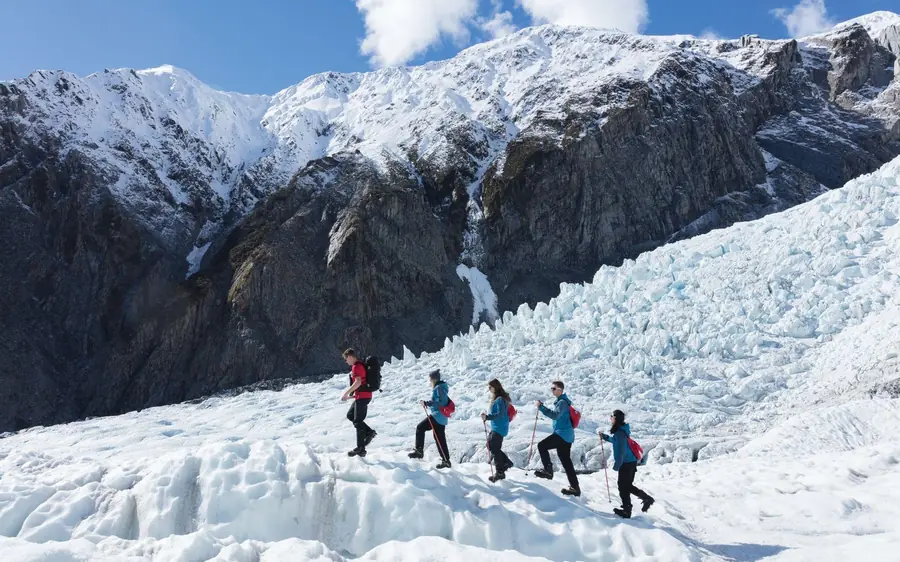
Single file behind a guide, on steps cut that morning. Nobody has walked exactly here before.
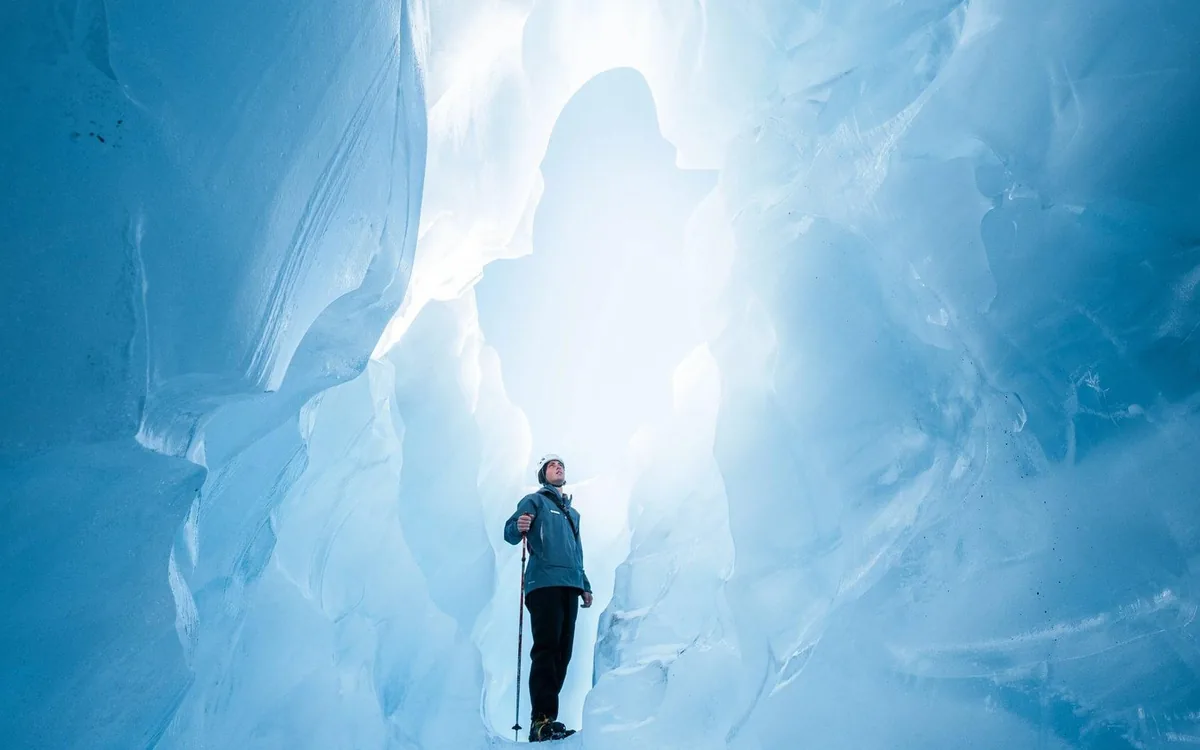
Meltwater carves them and they close again. This is the part a scenic flight cannot show you.
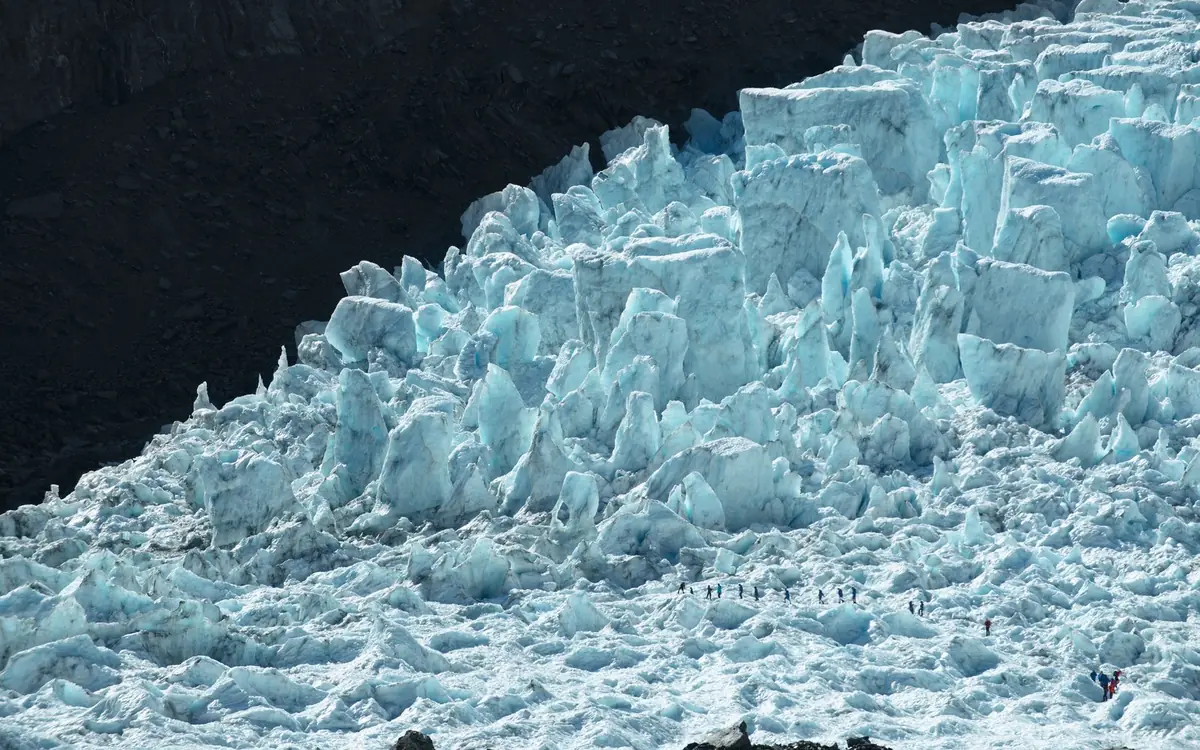
Those dots are people. There is nothing else in the frame to measure the ice against.
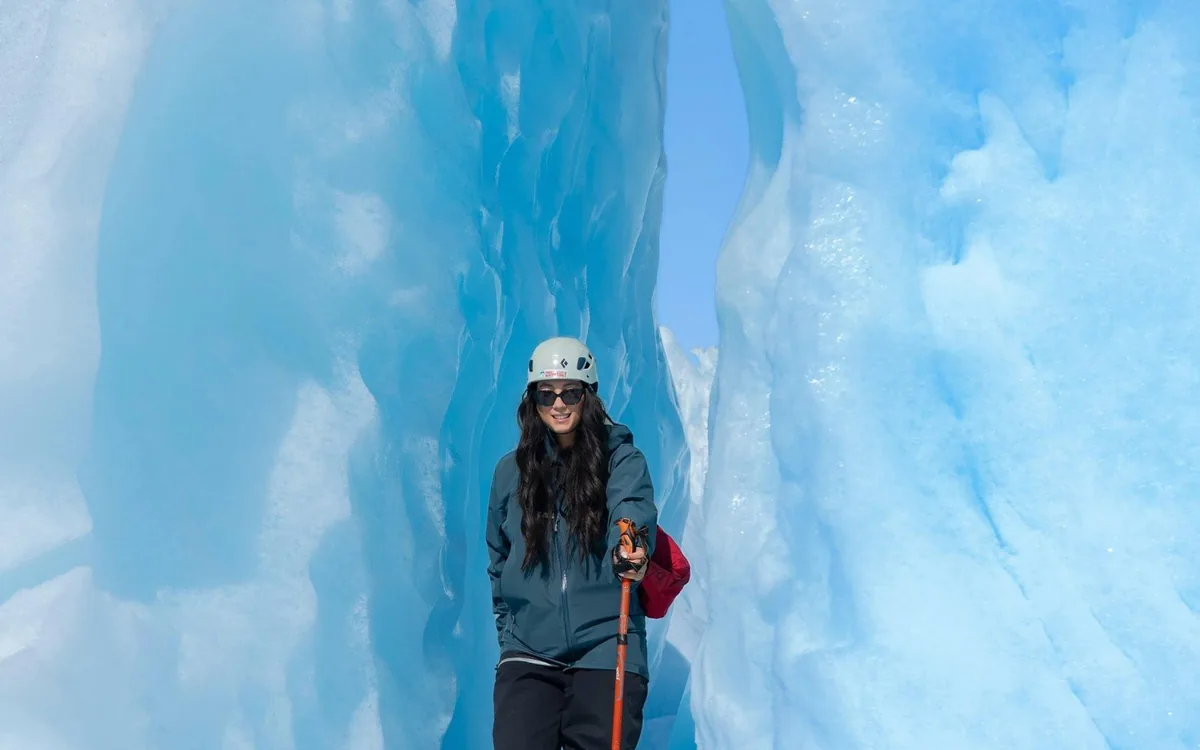
Boots, crampons, jacket and overtrousers come with the ticket. You bring a warm layer.
What it's like
The first thing that goes wrong is the weather, and the second is your understanding of it. You look out of the window in the village, see rain on the road and assume the day is lost. The base is looking at something else entirely: cloud base at two thousand metres and wind on the névé. Those two things decide it, and they are frequently not what the valley is doing.
So the morning goes like this. You ring, they say hold, they say come in at ten, and at ten you spend the best part of an hour being fitted. Boots that are heavier than anything you own. A jacket and overtrousers because it will be raining somewhere on that ice at some point. Crampons handed over in a bag, because you do not put those on until you are up there.
The briefing is short and mostly about walking. How to place a crampon so the points bite. Why you keep three metres behind the person in front. What happens if the weather closes while you are on the ice, which is that you stand still and wait for the machine.
The flight is five minutes and it is the least interesting five minutes of the day, which is a strange thing to say about a helicopter. It goes up over the terminal face, over the grey rubble the glacier left behind, past the icefall, and puts you down on a flat patch of névé.
Then it leaves. That is the moment. The machine lifts, the noise goes with it, and you are standing on a glacier with eleven other people, a guide and an ice axe, and no way down that does not involve someone coming back for you.
The walking is not hard, but it is not nothing either. Crampons make you walk flat-footed and wide, and for the first ten minutes you feel ridiculous. Then it clicks, and after that you can go almost anywhere the guide has cut steps — which is the other thing nobody tells you: the route is cut fresh. Somebody was up here at seven with an axe, because last week’s route has moved.
The features are what you came for. Pressure ridges the height of a room. Moulins — vertical shafts where meltwater disappears into the glacier and does not come back. And the tunnels: blue passages carved by water, two metres of ice overhead, lit from outside so the whole thing glows a colour that does not exist anywhere else on earth.
Two and a half hours later the machine comes back, sometimes to the same spot and sometimes not, because the ice has its own opinions. Five minutes down. You peel off the crampons in the yard, hand back the boots, and it is only mid-afternoon.
While you're in the village
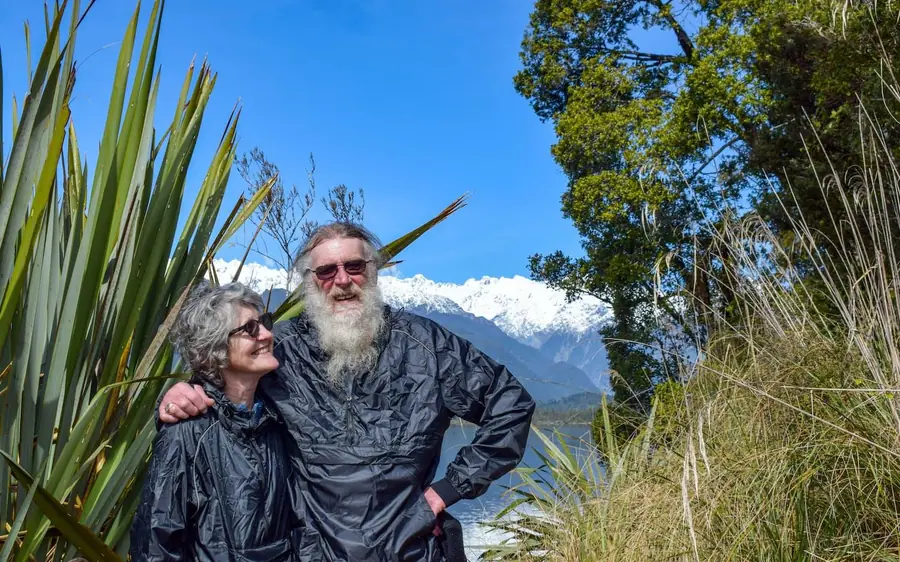
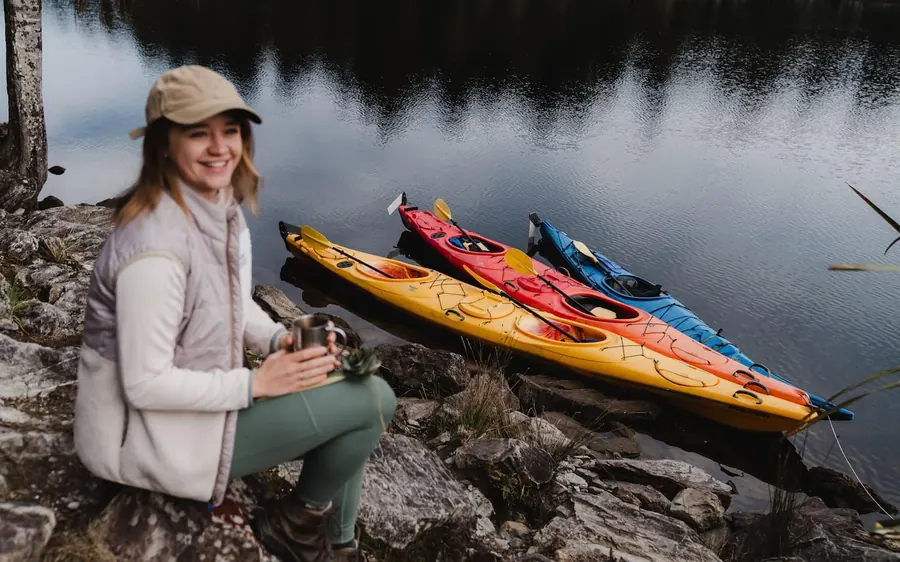
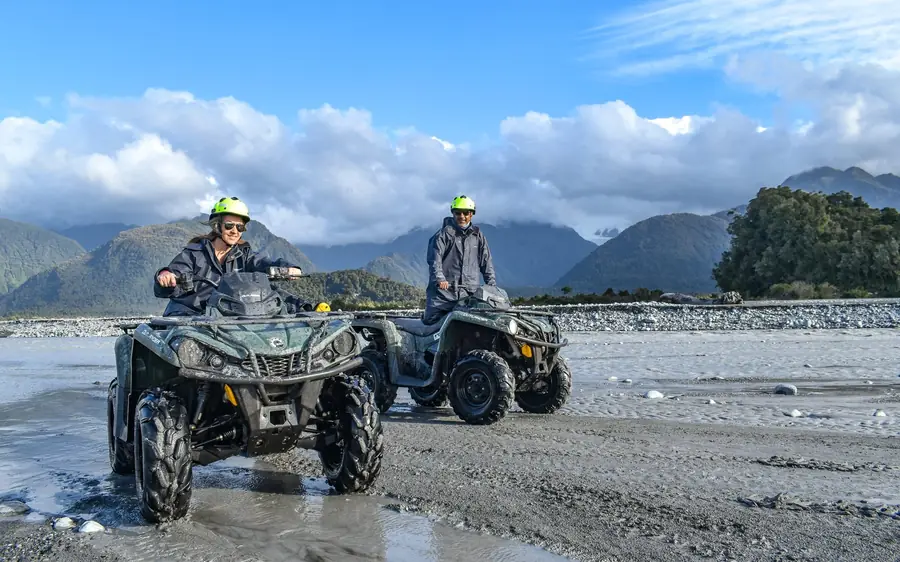
Nobody gets one morning here and flies. You need a spare day for the weather, and this is what people do with it: a lake that reflects the whole Southern Alps, a rainforest lagoon with a kiwi in it, and quad bikes that run in weather that grounds everything else.
Practical
Five things decide how the day goes: how many nights you have here, the hour you book, the weight and fitness rules, what you wear under the supplied jacket, and whether you read the cancellation policy before you paid.
The base watches the ceiling at two thousand metres and the wind on the névé. Rain in the village means very little.
Three hours on the ice needs more settled conditions than a twenty-minute flight. Heli hikes are stood down more often than scenic flights.
Air is usually calmest early and the pick-up matters as much as the drop-off. The first departures are the ones that go.
Leave a number when you book. Cancellations and call-backs both come by phone, often at short notice.
If they scrub the trip you get the money back. What you do not get back is the day.
A single-night stay is a coin toss. Two nights turns it into a plan.
On uneven ice, in crampons, with some step-ups. No climbing, but it is not a stroll either.
So are a jacket and overtrousers. You bring thick socks and a warm layer to go underneath.
Around 115 kg including harness and gear on most operators, because you are moving in it.
Most operators set a minimum around eight to ten years. Check the listing rather than assuming.
Glare off wet ice at two thousand metres is severe. Take them even on a grey morning.
A small pack is provided for a water bottle and a camera. Everything else stays in the yard.
Base, platform or hotel desk, the fare is the same. Booking ahead buys a slot, not a discount.
Standard on every trip on this page.
If it scrubs you still have days in hand. If you book the last one you have nothing.
Fewer departures, fewer seats, and the people who have done the standard hike book it.
Listings quote a total that includes fitting, briefing and both flights. The walking is the smaller number.
Up to eleven per guide on the standard hike; the extended day runs smaller.
On State Highway 6, about five and a half hours from Christchurch and the same from Queenstown.
You do not go to an airport. Everything leaves from the main road.
Walkable if you are staying in town.
A different valley with its own heli hike onto its own glacier.
The last departures are early afternoon in winter. Do not plan an evening arrival.
The stretch of highway either side of the village is long and empty.
Best time
Heli hikes run all year and the West Coast weather decides how often. What changes is the number of flyable mornings in the month and what the ice is doing, not the price.
Feb – Apr
The most settled air of the year and the best ice. Late summer melt opens the tunnels and the blue features that everybody photographs, and the mornings are the most reliable.
Nov – Jan
Long daylight and the fullest schedule, but this is peak season. Book ahead, and expect the first clear morning after a bad spell to be completely committed.
Sep – Oct
Deep snow covers the crevasse field and the route is simpler and whiter. Fronts still come through quickly, so keep a spare day.
May – Aug
Short days, cold, and the lowest proportion of flyable mornings. When it is clear the light is the best of the year, and it is clear less often.
Worth knowing
The walking route onto the glacier has not existed since 2012. The terminal face collapsed and the ice retreated; guided walks from the valley floor stopped. Any page describing one is out of date.
The quoted duration is not time on the ice. A four-hour trip is roughly an hour of fitting and briefing, ten minutes of flying and two and a half hours of walking. Read the listing for the walking figure.
Book the first morning of your stay, never the last. A heli hike needs a longer weather window than a scenic flight, so it is stood down more often. This one decision changes your odds more than anything else.
Everything except socks and a jumper is supplied. Boots, crampons, jacket, overtrousers and a small pack. Buying gear before you come is money wasted.
The route is cut fresh every morning. Somebody was up there at seven with an ice axe, because last week’s steps have moved. Nobody has walked exactly where you will walk.
The blue tunnels are seasonal. Meltwater opens them in late summer and they close again. February to April is when the ice is at its most interesting on foot.
Round out the trip
Go deeper
Common questions
The standard two-and-a-half-hour heli hike is $497, including two helicopter transfers, a guide, boots, crampons, jacket and overtrousers. The extended small-group day with lunch is $857, and the version that starts and ends in Queenstown is $995.
About two and a half hours of walking on the standard trip, and closer to four on the extended day. The four-hour figure in the listing includes the gear fitting, the briefing and both five-minute flights.
No. The terminal face collapsed in 2012 and foot access to the ice was closed. The valley walk ends at a roped viewpoint about a kilometre short of the face, and every guided hour on the glacier now begins with a flight.
Fit enough to walk on uneven ground for two to three hours with some step-ups. There is no climbing and no rope work, but crampons make you walk differently and the surface is never flat. If you walk regularly you will be fine.
Boots, crampons, a jacket, overtrousers and a small pack are supplied. You bring thick socks, a warm layer to go under the jacket, and sunglasses. Buying gear before you come is money wasted.
Often. This is one of the wettest inhabited places in New Zealand, and a heli hike needs a longer settled window than a scenic flight because the machine has to come back for you. Book the first morning of your stay and keep a spare day.
The heli hike if you want to walk on the glacier; the scenic flight if you want to see it. They are not cheaper and dearer versions of the same day. Twenty minutes in the air at $199 shows you the whole glacier; two and a half hours on foot shows you the inside of it.
Free · no account needed
One PDF: which morning to hold for the ice, what to wear under the supplied jacket, and what to do with a rained-out afternoon. Built from the same sources as this page.
The plan is on its way. If it isn't there in a minute, look in Promotions.
Why trust this page
Durations, group sizes, gear lists and prices are read off the live listings. The glacier retreat figures come from the Department of Conservation and from NIWA’s annual end-of-summer snowline survey.
Every heli hike bookable from this village is on the page, along with the scenic flights and the things people do on a grounded day. Nobody pays to be featured.
This page answers one question: whether to walk on the glacier or look at it, and which trip to book. If a section did not help with that, we cut it.
The terminal face collapsed in 2012 and there has been no walk-on route since. We say so rather than leave people to find out at the car park.
The answer
At $497 it is the most expensive half day on this coast and the only one that puts you inside the glacier rather than above it. Boots, crampons and a guide who cut the route that morning, in tunnels that will have closed by next season. Take the first departure of the day and keep a spare morning behind it.
Check dates and availability→ Free cancellation up to 24 hours · Reserve now, pay laterBefore you go
Which morning to hold for the ice, what to wear under the supplied jacket, and the wet-weather list for the days when nothing leaves the ground.
Check your inbox in a minute.
or
Just show me live dates and prices →