Our top pick398 reviews
4–8 h2.5-Hour Heli-Hike
★ 4.8 · 398 reviews
- 4 to 8 hours, on Franz Josef Glacier
- Helicopter transfer
- Most booked
- Free cancellation
$497$124.25 / hour
Check availability→ The whole day, in order
Listings sell the last two hours. This page covers all of it, including the boring parts: the phone call at seven in the morning, the hour spent being fitted with boots, the five minutes of flying, and the moment the machine lifts off and leaves you standing on a glacier. If you are about to spend $497 on half a day, this is what you are buying.
Quick answer
The short answer. Allow four hours door to door for a trip that has about two and a half hours of walking in it. An hour of that is gear fitting and briefing, ten minutes is flying, and the rest is on the ice. You will be back in the village by early afternoon.
Hour by hour
Written for a standard morning departure. The extended day is the same shape with a longer middle.
The decision to fly is made in the morning and it is made by people looking at cloud base and wind on the névé, not at the rain on the road. If you are staying in the village, make sure they can ring you.
This is the part nobody photographs and it takes longer than you expect. Boots stiff enough to take a crampon and heavier than anything you own. A waterproof jacket and overtrousers, because it will be raining somewhere on that ice at some point. A small pack. Crampons are handed over in a bag; you do not put them on here.
Mostly about walking. How to place a crampon so the points bite. Why you stay three metres behind the person in front. What happens if the weather closes while you are up there, which is that you stand still and wait for the machine.
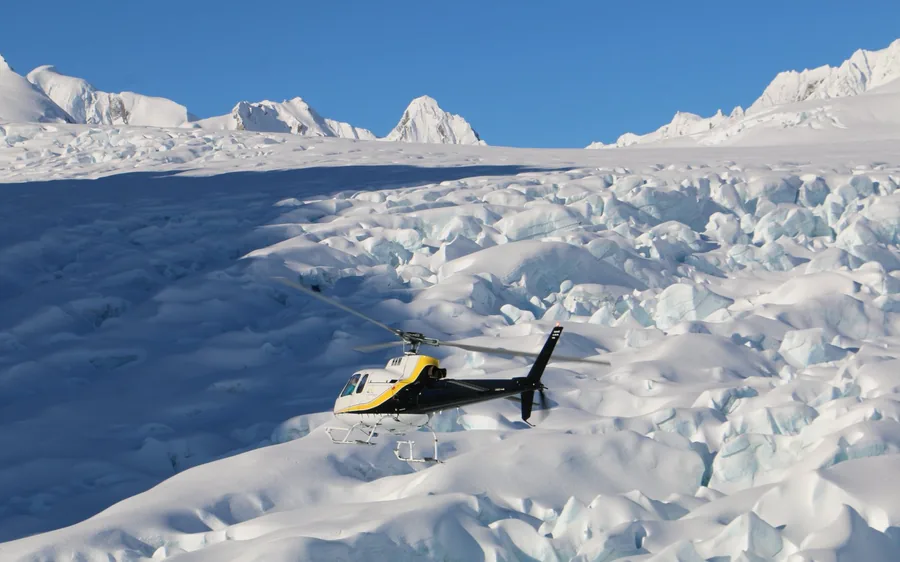
Up over the terminal face, over the grey rubble the glacier left behind when it retreated, past the icefall, and down on a flat patch of névé. Loud, short, and worth the ticket on its own.
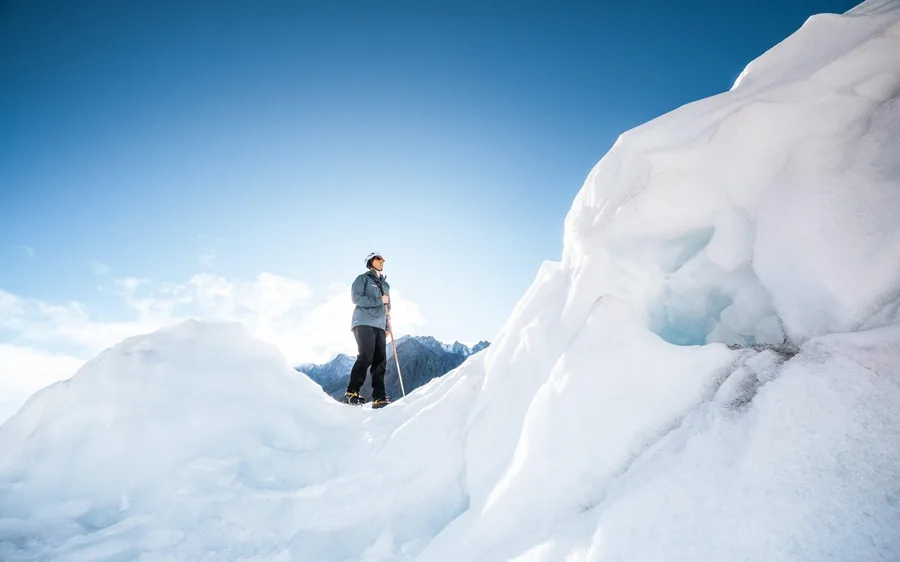
It lifts, the noise goes with it, and what is left is silence, eleven other people, a guide and an ice axe. Everybody remembers this bit.
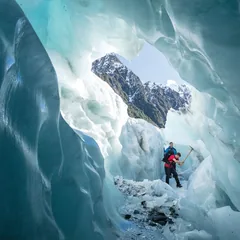
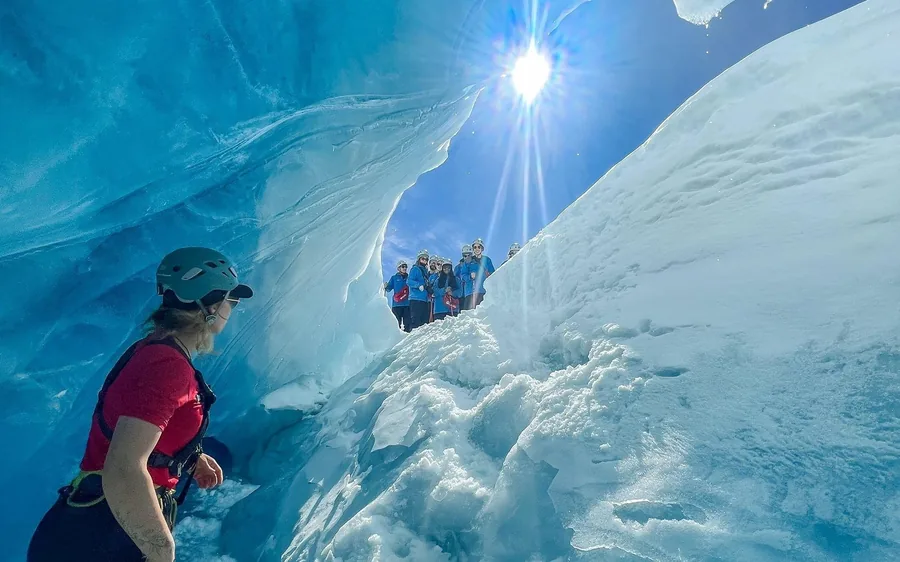
Crampons on, single file, following steps cut that morning. Pressure ridges, crevasses, moulins, and if the season is right, tunnels. Frequent stops: for photographs, for the guide to cut a step, and because the pace is set by the group.
The machine returns to wherever the guide has radioed. Five minutes down, boots and crampons off in the yard, and it is early afternoon.
The part people ask about
If you can walk a rough track for two hours, you can do this.
It is not hard in the mountaineering sense. There is no rope work, no climbing, and nothing exposed. Guides take people in their sixties and seventies on this every week.
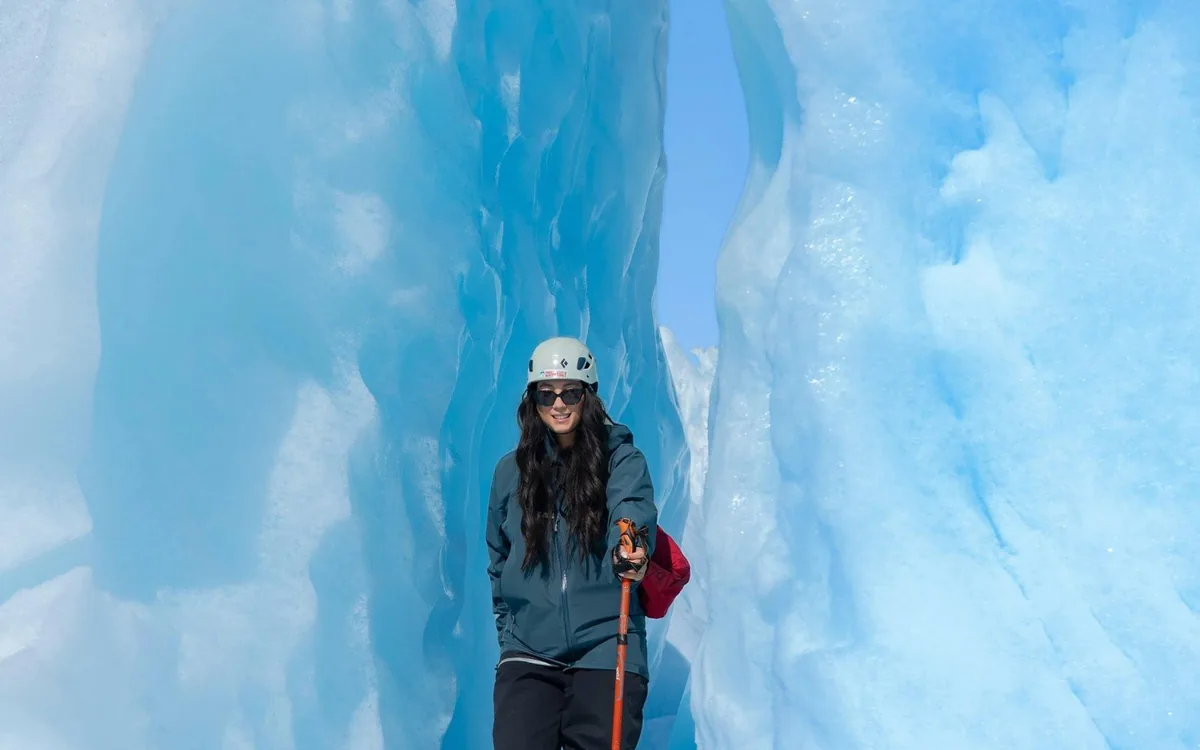
It is also not a stroll. You are on uneven ice for two to two and a half hours in stiff boots and crampons, with step-ups cut into the ice, occasional narrow squeezes between walls of ice, and a surface that is never flat. Crampons change how you walk — flat-footed, slightly wide, deliberate — and the first ten minutes feel absurd before it clicks.
The useful test is this: can you walk on a rough hill track for two hours without needing to stop for your knees? If yes, you will be fine. If no, the scenic flight at $199 shows you the same glacier without asking anything of you.
One more honest note: the group moves at the pace of its slowest member, and with eleven people that is sometimes noticeable. The small-group day exists partly to solve this.
Book direct
The standard hike, the full day, and the flight for people who would rather not walk.
★ 4.8 · 398 reviews
★ 5.0 · 1 reviews
★ 4.9 · 190 reviews
What can go wrong
The weather turns while you are up there. This is planned for. The guide keeps the group together, radios down, and the machine comes early. It is not dramatic and it is not rare — you may simply get ninety minutes instead of two and a half hours. Operators generally do not refund a shortened trip, and that is worth knowing before you pay.
The trip is cancelled before you leave. Far more common. You get a full refund, and if there is a later slot they will offer it. Book the first morning of your stay so there is somewhere to move you to.
You are slower than the group. Guides handle this constantly. Tell them at the base rather than on the ice; they will put you at the front where the pace is set rather than at the back chasing it.
Wondering how often the trip is stood down before it starts?
Weather and cancellations→Common questions
About four hours door to door for the standard trip: roughly an hour of gear fitting and briefing, ten minutes of flying and two to two and a half hours walking on the ice. The extended day runs about eight hours with roughly four on the glacier.
Two to two and a half hours on the standard heli hike, with frequent stops for photographs and for the guide to cut steps. The listing quotes the total trip, not the walking.
No. Boots are fitted at the base and crampons are handed over in a bag. They go on once you are on the ice, and the guide checks every set before anyone walks anywhere.
The guide keeps the group together and radios for an early pick-up. It happens, it is planned for, and it usually means a shorter trip rather than a dramatic one. A shortened trip is not normally refunded.
No. Use the ones at the base before you fly. This is a genuine practical point on a four-hour trip and nobody puts it in a listing.
Yes, constantly. The walk is punctuated by stops, and guides are used to being asked to take the group shot. There is no photographer and no photo package — whatever you shoot is yours.
Go deeper
What it is, what it costs, and why there is no way onto the ice without one.
PricesThree heli hikes priced against the scenic flight, and what the money actually buys.
VerdictThree heli hikes compared on time on the ice, group size and what is included.
Hike or flyThe most common wrong booking in Franz Josef, settled with both sets of numbers.
Which oneTwo glaciers, two villages, and which one to put your only clear morning into.
WeatherWhy a hike is grounded more often than a flight, and how to build a trip around it.